Intelligent automation in modern business strategy is no longer viewed as a future initiative waiting on long-term roadmaps. Instead, it has become an immediate priority for businesses aiming to stay competitive in rapidly evolving markets. Across industries, organizations are under constant pressure to reduce operational costs, improve efficiency, accelerate service delivery, and deliver exceptional customer experiences. At the same time, they are dealing with critical challenges such as workforce shortages, rising operational expenses, overwhelming volumes of data, and ever-increasing customer expectations. In this environment, businesses need smarter, faster, and more adaptive solutions to overcome these challenges and drive sustainable growth.
This is where intelligent automation is changing the game.
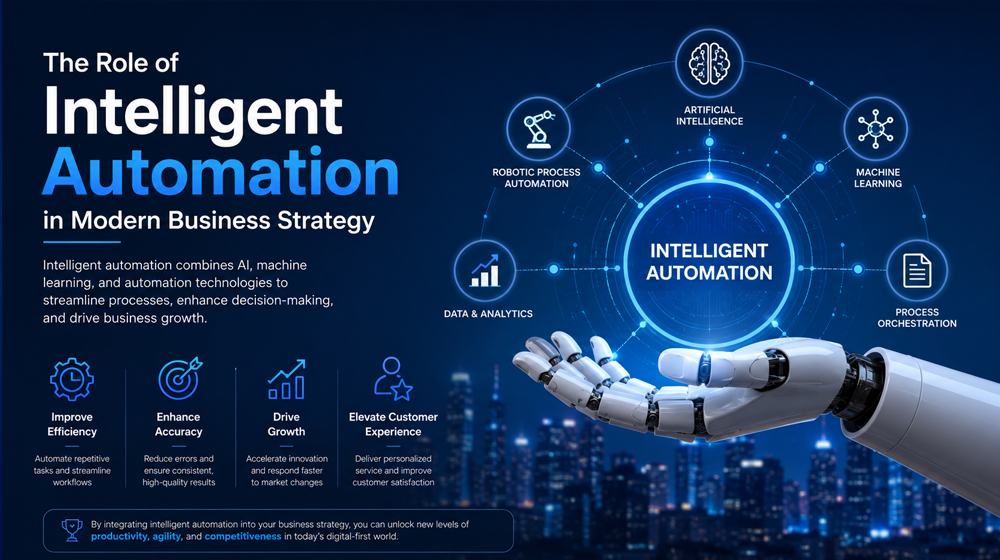
Modern businesses are no longer relying solely on manual workflows or traditional automation. Instead, they are adopting intelligent automation to build faster, smarter, and more adaptive operational systems. Intelligent automation combines artificial intelligence, machine learning, robotic process automation, natural language processing, predictive analytics, and decision intelligence to automate not just repetitive tasks, but also cognitive decision-making processes.
Organizations that fail to adopt intelligent automation are increasingly facing operational bottlenecks, slower decision cycles, and reduced competitiveness. Meanwhile, businesses implementing intelligent automation are seeing measurable gains in productivity, cost optimization, risk reduction, and customer satisfaction.
The real question is no longer whether companies should adopt intelligent automation. The real question is how quickly they can integrate it into their business strategy.
What Is Intelligent Automation and Why Does It Matter Today?
Intelligent automation refers to the integration of AI-powered technologies with process automation systems to create self-improving workflows. Unlike traditional automation, which follows predefined rules, intelligent automation can analyze data, learn from patterns, predict outcomes, and make decisions with minimal human intervention.
Traditional automation works well for repetitive rule-based tasks such as invoice generation or scheduled reporting. However, modern business environments are far more complex. Customer behavior changes rapidly. Market conditions shift unexpectedly. Fraud patterns evolve continuously. Static automation cannot keep up with this dynamic reality.
Intelligent automation solves this problem by adding intelligence to automation.
In customer service, traditional automation typically routes support tickets based on fixed rules or predefined categories. However, intelligent automation in modern business strategy takes this process far beyond basic task handling. It can analyze customer sentiment, detect the urgency of requests, predict the likelihood of escalation, and automatically route each ticket to the most suitable support team. As a result, businesses can resolve issues faster, improve customer satisfaction, and deliver more personalized support experiences.
This shift transforms automation from task execution to strategic decision support.
The importance of intelligent automation has grown because businesses now generate massive volumes of data every second. Without intelligent systems, organizations struggle to convert this data into actionable insights.
Data alone has no value unless businesses can interpret and act on it quickly.
That is why intelligent automation has become central to modern business strategy.
The Growing Challenges Modern Businesses Face
Many companies still operate with fragmented systems, legacy workflows, and disconnected data environments. These challenges create inefficiencies that directly affect revenue and customer retention.
One of the biggest pain points businesses face today is process inefficiency.
Employees spend hours performing repetitive manual tasks such as data entry, report generation, approvals, compliance checks, and documentation. These repetitive tasks not only slow down operations but also increase the likelihood of human error.
Another major challenge is decision-making delays.
Executives need accurate insights in real time. However, when data exists in silos across departments, decision-makers struggle to obtain a unified view of operations.
Customer expectations have also changed dramatically.
Today’s customers expect instant responses, personalized experiences, and seamless digital interactions. Businesses that cannot deliver speed and personalization lose customers to more agile competitors.
Operational costs are another serious concern.
Rising labor costs, infrastructure expenses, and compliance requirements are putting pressure on profit margins. Companies need scalable systems that improve efficiency without proportionally increasing costs.
These pain points collectively create a need for intelligent, adaptive automation systems.
How Intelligent Automation Fits into Modern Business Strategy
Modern business strategy is no longer focused only on growth. It is focused on sustainable growth with efficiency, resilience, and agility.
Intelligent automation directly supports these strategic priorities.
Businesses adopting intelligent automation typically align it with five strategic goals: improving operational efficiency, reducing costs, enhancing customer experiences, improving risk management, and accelerating innovation.
When automation becomes part of business strategy rather than an isolated IT initiative, it drives enterprise-wide transformation.
For example, a financial institution using intelligent automation can automate KYC verification, fraud detection, compliance screening, and risk scoring simultaneously. This reduces onboarding time while improving security and regulatory compliance.
Similarly, manufacturing companies can use intelligent automation for predictive maintenance, quality control, inventory forecasting, and supply chain optimization.
This strategic integration creates a competitive advantage.
Businesses move faster, respond quicker, and operate smarter.
AI Model-Based Algorithms Powering Intelligent Automation
The real strength of intelligent automation lies in its AI-driven algorithms. These algorithms enable systems to analyze patterns, make predictions, and continuously improve.
Machine Learning Algorithms
Machine learning models learn from historical data and identify patterns that humans may miss. These models improve over time as more data becomes available.
For example, machine learning can predict customer churn by analyzing purchasing behavior, engagement patterns, and support interactions.
Businesses can proactively retain at-risk customers before they leave.
Natural Language Processing
NLP allows machines to understand human language.
This technology powers AI chatbots, sentiment analysis tools, virtual assistants, and document processing systems.
For example, insurance companies use NLP to analyze claims documents and extract relevant information automatically.
This significantly reduces processing time.
Predictive Analytics Algorithms
Predictive models use historical data to forecast future outcomes.
Businesses use predictive analytics for demand forecasting, fraud detection, pricing optimization, and resource planning.
For example, retail companies predict seasonal demand to optimize inventory levels and reduce stock shortages.
Computer Vision Models
Computer vision enables machines to interpret visual information.
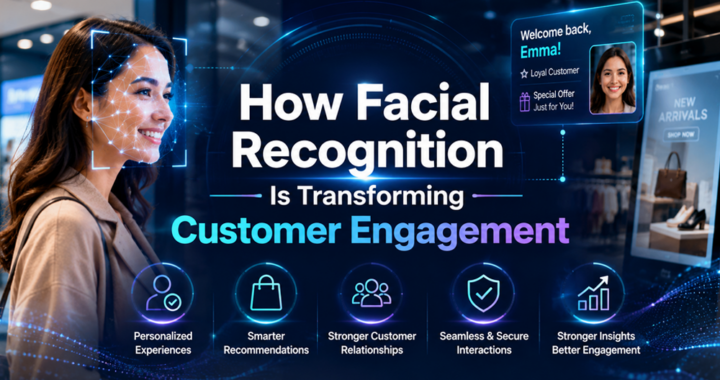
Industries such as healthcare, manufacturing, and security use computer vision for quality checks, facial recognition, and defect detection.
These AI models make intelligent automation truly adaptive.
Leveraging Data Analytics for Smarter Business Decisions
Data analytics acts as the brain behind intelligent automation.
Without data analytics, automation simply executes instructions. With analytics, automation becomes strategic.
Businesses today collect structured and unstructured data from websites, CRM systems, ERP software, IoT devices, customer interactions, and supply chain networks.
The challenge is turning this raw data into meaningful insights.
Intelligent automation solves this by combining real-time analytics with AI algorithms.
For example, a sales team using intelligent automation can analyze customer engagement data, predict lead conversion probability, and prioritize high-value prospects automatically.
This improves sales efficiency and conversion rates.
Similarly, finance teams can monitor cash flow anomalies, identify fraud risks, and forecast revenue using automated analytics systems.
The result is faster and smarter decision-making.
Companies that use data analytics effectively gain a major competitive advantage because they can respond to market changes faster than competitors.
Real-Time Market Adoption of Intelligent Automation
The adoption of intelligent automation is accelerating globally.
Recent market data indicates strong growth across industries.
The global intelligent process automation market is projected to grow significantly over the next decade, driven by increasing AI adoption and enterprise digital transformation initiatives.
More organizations are investing in AI-driven workflow systems because they deliver measurable ROI.
Companies adopting intelligent automation report improvements in:
Operational efficiency through reduced manual work.
Faster processing times across critical workflows.
Improved customer engagement through personalization.
Reduced error rates in compliance-sensitive operations.
Lower operational costs through optimized resource allocation.
This rapid adoption is not limited to large enterprises.
Small and mid-sized businesses are also investing in intelligent automation because cloud-based AI solutions have made advanced automation more accessible and affordable.
This trend is reshaping competitive landscapes across industries.
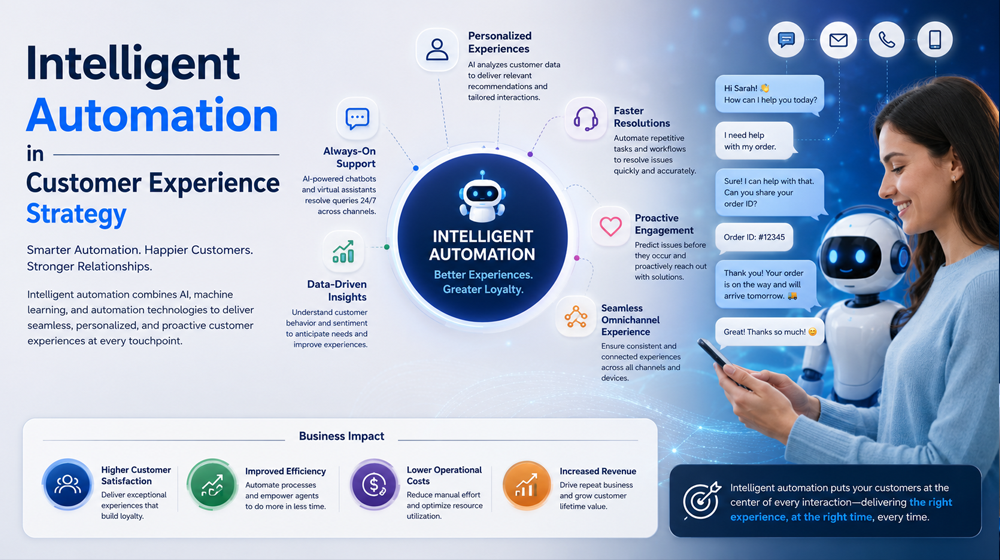
Intelligent Automation in Customer Experience Strategy
Customer experience has become one of the strongest business differentiators.
Customers now judge businesses based on speed, convenience, personalization, and service quality.
Manual customer support systems cannot scale efficiently.
Intelligent automation helps businesses deliver superior customer experiences without increasing operational burden.
AI chatbots can handle routine inquiries instantly.
Recommendation engines personalize user experiences.
Sentiment analysis identifies dissatisfied customers before escalation.
Predictive models help businesses anticipate customer needs.
For example, e-commerce platforms use intelligent automation to recommend products based on browsing history, purchase patterns, and customer preferences.
This increases conversion rates and average order values.
Customer experience becomes proactive rather than reactive.
That creates stronger brand loyalty.
Cost Reduction Through Intelligent Automation
One of the biggest reasons businesses adopt intelligent automation is cost optimization.
Manual processes are expensive.
They require labor, time, supervision, training, and error correction.
Intelligent automation reduces these costs significantly.
For example, automated invoice processing can reduce processing time from hours to minutes.
AI-driven fraud detection can prevent financial losses.
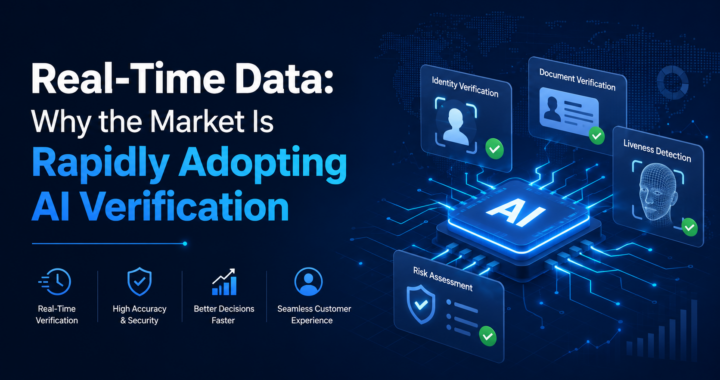
Automated document verification reduces onboarding costs.
Businesses can scale operations without proportional workforce expansion.
This improves profit margins.
However, cost reduction does not mean replacing people entirely.
The most successful businesses use automation to eliminate low-value repetitive tasks so employees can focus on strategic and creative work.
This creates better productivity and workforce satisfaction.
Intelligent Automation and Risk Management
Risk management has become increasingly complex.
Businesses face cybersecurity threats, fraud, compliance challenges, and operational risks.
Traditional risk monitoring often reacts after damage occurs.
Intelligent automation enables proactive risk detection.
AI models continuously monitor transactions, behavior patterns, and system activity.
When anomalies are detected, alerts are triggered instantly.
For example, banks use AI-powered fraud detection systems to identify suspicious transactions in milliseconds.
Similarly, healthcare systems use automation to ensure regulatory compliance and patient data security.
This reduces financial and reputational risks.
Modern businesses cannot afford reactive risk management.
Proactive intelligence is essential.
Common Mistakes Companies Make During Automation Adoption
Despite the benefits, many automation initiatives fail.
The main reason is poor strategy.
Some companies automate broken processes without optimizing them first.
This only accelerates inefficiency.
Others focus solely on cost reduction while ignoring user experience.
This often creates resistance from employees and customers.
Another common mistake is poor data quality.
AI systems depend heavily on clean, structured, and relevant data.
Bad data produces bad decisions.
Successful intelligent automation requires clear strategy, quality data, and measurable KPIs.
Businesses must approach automation as transformation, not just technology implementation.
Best Practices for Implementing Intelligent Automation
Successful implementation starts with identifying business pain points.
Companies should ask critical questions.
Where are delays occurring?
Which workflows consume the most resources?
Where do human errors happen most frequently?
Which processes affect customer experience directly?
After identifying priorities, businesses should select automation opportunities with high ROI potential.
It is also important to ensure cross-functional collaboration between IT teams, business leaders, operations teams, and compliance stakeholders.
Pilot testing is crucial.
Businesses should start small, validate results, optimize workflows, and scale gradually.
Continuous monitoring is equally important.
Intelligent automation performs best when models are regularly updated with fresh data.
This ensures long-term accuracy and adaptability.
The Future of Intelligent Automation in Business Strategy
The future belongs to autonomous enterprises.
In the coming years, intelligent automation will evolve beyond process optimization.
Businesses will increasingly use AI agents capable of independent reasoning, decision support, and workflow orchestration.
Hyperautomation will become mainstream.
This means combining multiple advanced technologies to automate end-to-end business operations.
Generative AI will also play a major role.
AI systems will create reports, summarize meetings, generate insights, write business communications, and support strategic planning.
The organizations that embrace this shift early will gain substantial competitive advantages.
Those that delay may struggle to survive in increasingly digital markets.
Conclusion
The role of intelligent automation in modern business strategy is no longer optional. It has become a critical driver of growth, resilience, efficiency, and innovation.
Businesses today face rising operational costs, increasing competition, complex compliance demands, and rapidly evolving customer expectations. Traditional workflows cannot meet these demands effectively.
Intelligent automation provides the solution.
By combining AI model-based algorithms, machine learning, predictive analytics, and data-driven decision systems, businesses can transform operations from reactive to proactive.
The biggest advantage is not just automation.
It is intelligence.
Organizations that leverage intelligent automation strategically can reduce costs, improve customer experiences, strengthen risk management, and make smarter business decisions in real time.
The future of business belongs to companies that automate intelligently, act decisively, and innovate continuously.